
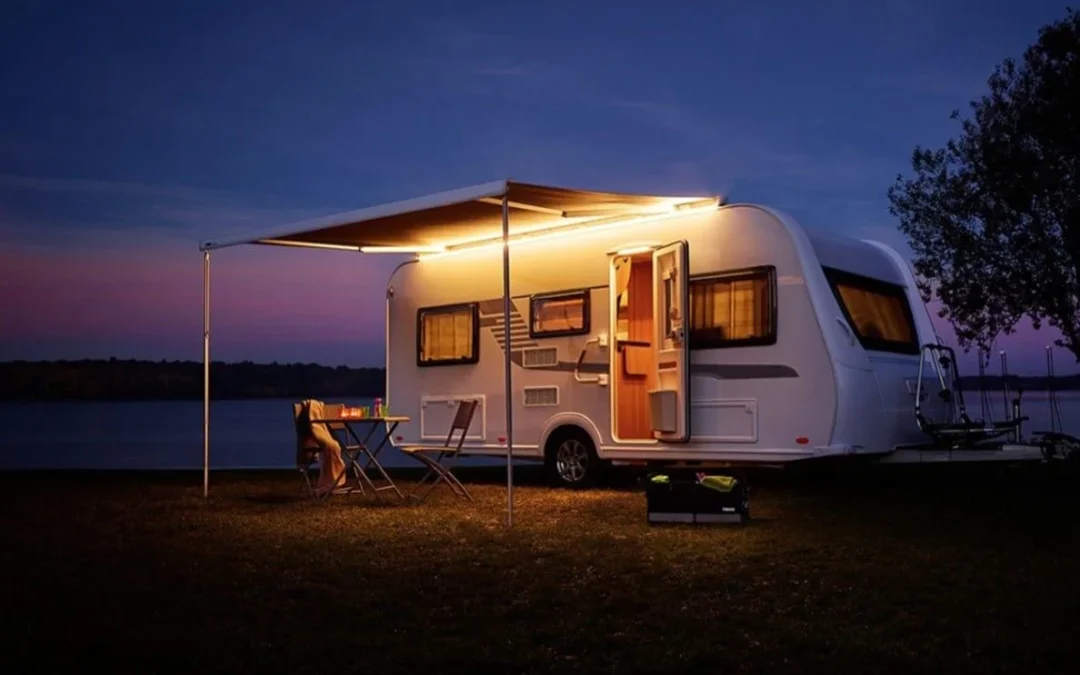
Upgrading to LED lighting is one of the most effective electrical improvements you can make to a caravan, motorhome, or campervan. You get lower current draw, reduced heat, and long service life, while improving light quality inside the living space and at marker and number plate positions. This guide covers how to choose the right lamps, plan a safe conversion, and avoid common pitfalls.
Can you fit LED lights in a caravan or motorhome?
Yes. Most leisure vehicles can be converted from halogen or incandescent to LED without major modification, as long as you match:
- Base type (for example G4, MR11, MR16, festoon, wedge)
- Operating voltage (choose vehicle-grade LEDs designed for 10 to 30V DC)
- Physical size (so the bulb fits and clears the lens/reflector)
Tip: Avoid domestic “12V LEDs” that are not designed for vehicle voltage spikes. Vehicle-grade LEDs cope better with alternator and charger variations.
Lumens vs watts (how to choose brightness properly)
When switching to LED, don’t compare by watts. Compare by lumens (brightness) and check the beam pattern to avoid glare or hot spots.
Quick reference points
- 5W halogen G4 is roughly 80 to 100 lumens → choose 100 to 150 lumens LED
- 10W halogen MR11/MR16 is roughly 150 to 200 lumens → choose 200 to 250 lumens LED
- 21W festoon is roughly 250 lumens → choose 250 to 300 lumens LED
Colour temperature (pick the right “white” for each area)
- Warm white (2700 to 3200K): lounges, bedrooms, general living areas
- Neutral white (3500 to 4100K): kitchens/galley, dinettes, mixed-use areas
- Cool white (5000 to 6000K): task areas, garages, utility zones (can feel harsh in lounges)
If colours look flat in food prep areas, aim for CRI 80+ for interior LEDs.
Dimming and flicker (what causes issues)
LED dimming depends on the LED electronics and the type of dimmer fitted in the vehicle.
- PWM dimmers (common in leisure vehicles) usually work well with dimmable LEDs
- Older resistive/rheostat dimmers can cause flicker or limited dimming range
If you get flicker, the usual fix is switching to a PWM dimmer designed for low-load LED circuits.
CAN-bus and bulb-out warnings (mainly exterior lights)
Some tow vehicles and road-light circuits monitor bulbs by sensing current. LEDs draw less current, so you can sometimes get “bulb out” warnings on monitored circuits.
- Use CAN-bus compatible LEDs with built-in load modules
- Or use properly sized external resistors (where appropriate)
- Where legal compliance matters, consider complete LED lamp assemblies with the correct approvals rather than retrofitting bulbs
How long will LEDs run on a 12V battery?
You can estimate run time using amp-hours (Ah).
Example: A typical LED downlight drawing 2W uses about 0.17A at 12V. Ten lights for four hours is:
0.17A × 10 × 4 = 6.8Ah
On a 100Ah lead-acid battery (often treated as ~50Ah usable), that lighting load will run for several evenings, before you factor in other loads like pumps, fans, and fridges.
Can you change reverse lights to LED?
Yes, as long as you keep legal colour/brightness and choose a beam pattern that works with the housing. Some housings need an LED that throws light in multiple directions, not a narrow “spot” beam.
Planning your LED upgrade (room-by-room)
- Living areas: warm to neutral white, diffused lenses, 100 to 200 lumens per fitting
- Galley: neutral to cool white under-cabinet strips for task lighting
- Beds/reading: focused lights, 80 to 150 lumens, ideally with switches
- Washroom: neutral white with sealed fittings (check IP rating)
- Marker/number plate lights: direct-fit replacements that match footprint and sealing, or full assemblies for reliability
Installation tips (safe and simple)
- Disconnect the battery or isolate the 12V supply before starting
- Replace one circuit at a time, test, then move on
- Keep old halogen bulbs as temporary spares in case of travel issues
- Label any dimmer circuits or resistors added for future maintenance
Wiring checks before conversion
- Measure voltage at the fitting under load (a healthy system often sits roughly 12.0 to 14.4V)
- Check polarity (some LED boards are polarity-sensitive)
- Inspect holders and wiring for heat damage from old halogens
- Check gaskets and sealing on exterior marker lights to prevent water ingress
Do you need to change wiring for LED lights?
Usually no. Existing 12V cabling is normally fine because LED current is lower. You may need to replace old dimmers, add resistors for monitored circuits, or replace worn lamp holders.
Is there a downside to LEDs?
There can be if you choose poorly:
- Flicker with incompatible dimmers
- Harsh light if you choose cool white in living spaces
- Glare if you choose very high-lumen point sources without diffusers
- Early failures if the LED driver isn’t vehicle-grade
Summary
LED upgrades reduce current draw, extend battery runtime, and improve light quality. Match bulbs by base and size, choose brightness by lumens (not watts), select colour temperature by zone, and confirm dimmer compatibility. For monitored exterior circuits, use CAN-bus compatible LEDs or suitable load solutions. With a structured plan and vehicle-grade components, you will get reliable, efficient lighting inside and out.