
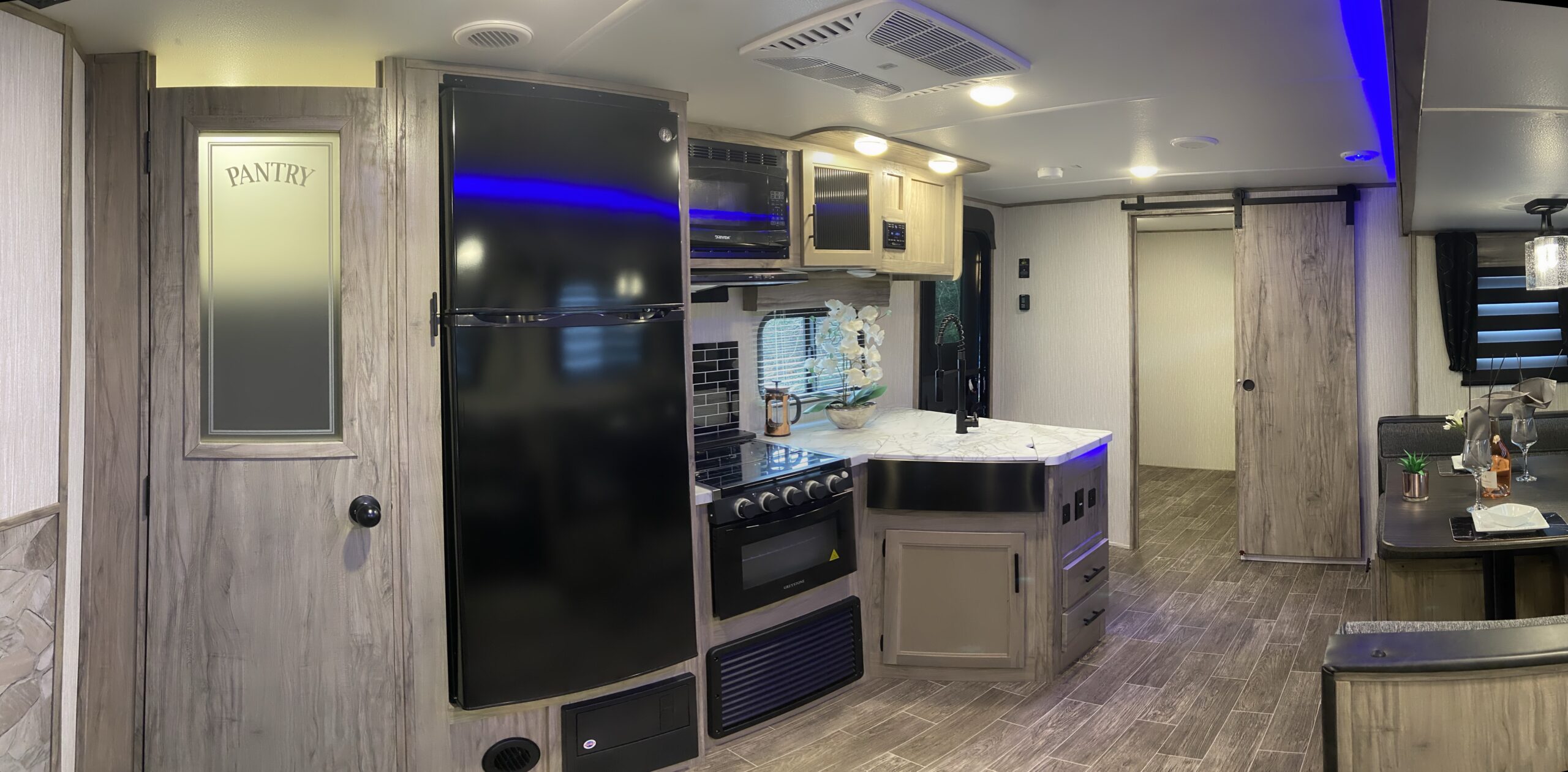
Mains hook-up is convenient, but it must be set up correctly to stay safe and compliant on UK campsites. This guide gives a clear procedure for choosing the right cable, testing RCD protection, routing and protecting leads, understanding IP ratings, and planning loads for common appliances. It also explains 12V vs 230V and inverter sizing so you can use your motorhome electrical system with confidence.
Site supply and vehicle basics
- UK campsite pillars typically provide 230V AC at 50Hz via a 16A CEE outlet.
- Most leisure vehicles connect using a 16A CEE plug on a 25m orange mains lead to an onboard consumer unit with an RCD and MCBs.
- Your vehicle should have a current electrical inspection label or certificate. If in doubt, have a qualified electrician inspect the installation before connecting to a public supply.
Selecting a compliant 25m mains lead
Use a 25m mains lead with the following characteristics:
- Length: 25m (to reach most pitches without daisy-chaining)
- Conductor: 2.5mm², three-core flexible cable (H07RN-F or equivalent heavy-duty rubber)
- Colour: high-visibility orange
- Connectors: 16A CEE plug and coupler with firm strain relief and intact seals
- Condition: no cuts, abrasions, flattened sections, or corroded pins
Do not use cable drums or domestic extension leads. Do not extend beyond 25m with adapters or linked leads. If the bollard is close, coil excess loosely in a figure of eight and keep the cable fully unwound to prevent overheating.
Connection sequence and RCD checks
Follow this order every time:
- Inspect the site outlet and your lead for damage or moisture.
- Switch off all high-load appliances in the vehicle.
- At the bollard, set the breaker to OFF if accessible.
- Connect the lead to the vehicle first, then to the bollard.
- Restore the bollard breaker.
- Inside the vehicle, reset the RCD and MCBs.
- Test the RCD using the test button. It must trip immediately, then reset.
If the RCD fails to trip, disconnect and do not use the supply until protection is confirmed functional. Test monthly at minimum, and after any electrical work.
Cable routing and site safety
- Lay the cable along pitch edges, not across paths or driveways.
- Avoid wheels, levelling ramps, doorways, and puddle-prone areas.
- Use cable ramps where crossing is unavoidable.
- Keep the entire length visible for inspection (not buried or hidden under foliage).
- Elevate connectors off wet ground using hangers or a dry support.
- Avoid tight bends at connectors and maintain gentle strain relief.
IP ratings and wet conditions
- CEE connectors are typically IP44 when properly mated. Inspect gaskets and locking rings.
- Do not use damaged or ill-fitting connectors in rain.
- If you must connect in wet conditions, shield the joint from direct water and complete the connection quickly.
- Vehicle inlet housings and external sockets should be intact with no cracked seals. Replace damaged components immediately.
Amperage limits on UK sites
Most pitches supply 16A. Some are 10A or even 6A. Treat the pitch limit as the absolute ceiling for total simultaneous draw:
- 16A at 230V is about 3,680W
- 10A at 230V is about 2,300W
- 6A at 230V is about 1,380W
Your onboard MCB ratings do not increase the site limit. Plan to stay below the lower of the site limit and the rating of your internal circuits.
Load planning for heaters, kettles, and chargers
Typical appliance loads:
- 2kW fan heater: about 8.7A (use 1kW or 500W settings on low-amp sites)
- Kettle: 1.0 to 3.0kW (a 2kW kettle draws about 8.7A)
- Battery chargers/converters: commonly 100 to 600W when active
- Space or water heater electric boost: roughly 500W to 2kW
- Induction hobs: commonly 1.5 to 3.0kW
- Portable fridges: often 40 to 120W while running (higher start-up peaks)
Rule of thumb: plan one high-load device at a time. On a 10A hook-up, avoid running a 2kW heater while boiling a 2kW kettle. Run them sequentially, not together. Use lower power settings where available. A plug-in energy meter helps you check real usage and avoid nuisance trips.
Adapters and inverters: use with caution
- Use adapters only for safe, legal interface needs. Never backfeed a vehicle through internal sockets.
- Inverters convert 12V DC to 230V AC for off-grid use. Size the inverter to your intended loads and battery capacity.
- Check surge ratings and ensure the DC cabling and fusing are correctly specified.
How electricity works in a motorhome
Motorhomes typically use two electrical systems:
- 12V DC: powered by the leisure battery. Runs lights, water pump, control panels, fans, and efficient appliances. Stabilised by the charger on hook-up and often supported by solar.
- 230V AC: available on mains hook-up or via an inverter. Feeds domestic sockets and high-power appliances. Protected by the RCD and MCBs.
A charger or power management unit converts incoming AC to DC to maintain the leisure battery and supply 12V circuits. Some systems also include DC-to-DC charging from the alternator while driving.
Do you need 240V in a campervan?
No, not strictly. Many owners run solely on 12V for lighting, ventilation, pumps, and a compressor 12V fridge. If you want kettles, induction hobs, hairdryers, or other domestic appliances, then 230V access via hook-up or inverter becomes necessary. For frequent off-grid stays, prioritise efficient 12V appliances and only add 230V where it genuinely helps.
What you can run off a 12V leisure battery
Efficient 12V loads include:
- LED lighting (for example, 12V campervan lights)
- Ventilation fans and control systems
- Water pumps and tank sensors
- 12V fridges designed for mobile use
- USB charging for phones, tablets, and small devices
Avoid running traditional kettles, heaters, and high-power cooking appliances directly from 12V. They require impractical current and will drain a battery rapidly.
Will a 2000W inverter run a kettle?
It can, with caveats. Many travel kettles are 800 to 1,000W and a 2,000W pure sine inverter will usually run them (subject to surge capability). Full-size kettles at 2,000 to 3,000W will overload a 2,000W inverter or force it to run at the limit.
Also consider the DC draw: a 1,500W AC load can pull 140A or more from a 12V battery (plus inverter losses). That requires short, heavy cables, correct fusing, and a high-capacity battery bank. For routine hot drinks off-grid, gas or a low-wattage kettle is often more practical.
How big an inverter do you need for a campervan?
Work backwards from your highest essential AC load:
- Occasional laptop/camera charging or small TV: 300 to 600W
- Mixed small appliances and low-wattage kettle alternatives: 800 to 1,200W
- Induction hob or full-size kettle use: 1,500 to 2,000W (with significant battery and cabling requirements)
- Multiple high loads or tools: 2,000W+ (often paired with lithium batteries and substantial DC cabling)
Choose pure sine output for sensitive electronics. Check continuous and surge ratings, then size the DC cables and fusing correctly. If your needs are modest, avoid oversizing. Smaller inverters usually have lower idle losses and are easier to integrate.
Practical hook-up routine checklist
- Verify site amperage and note it at the control panel.
- Inspect the 25m mains lead and connectors.
- Connect in the safe sequence and test the RCD.
- Route and protect the cable, and keep joints elevated from wet ground.
- Enable only the circuits you need and keep high loads sequential.
- Recheck lead condition and bollard trip status daily in heavy rain or freezing conditions.
Summary
Safe hook-up relies on a compliant 25m, 2.5mm² mains lead, correct connection sequence, working RCD protection, sensible cable routing, and respect for site amperage limits. Plan your loads and run one heavy appliance at a time. Use 12V for routine onboard systems and reserve 230V for specific appliances, whether through site supply or a correctly sized inverter with appropriate batteries and cabling. Follow these steps to stay safe, within site rules, and avoid nuisance trips while enjoying reliable power on every pitch.